Everton identity / History & photography
The little tower on the big badge
From a village lock-up on Everton Brow to the crest above your head at Bramley Moore.
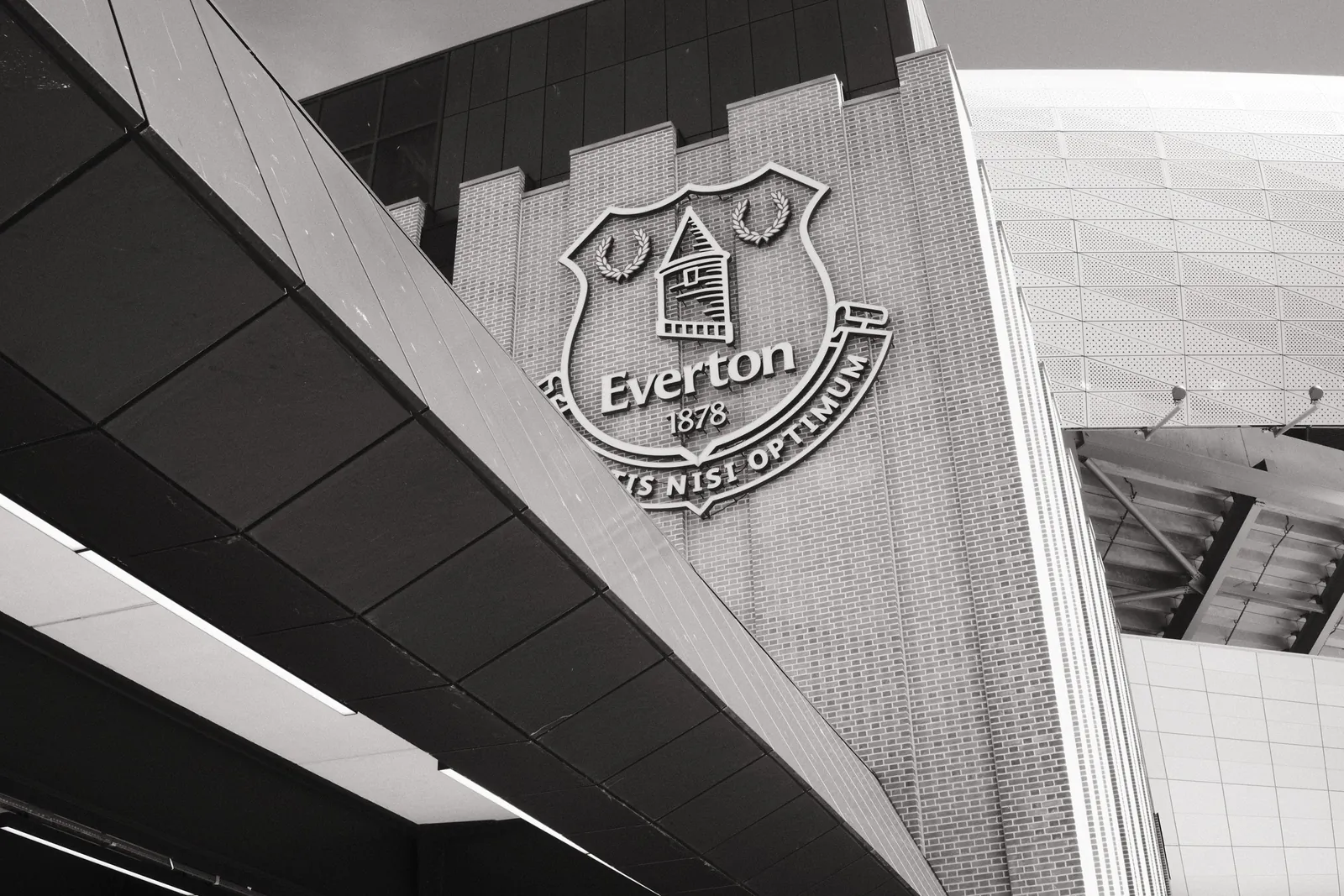
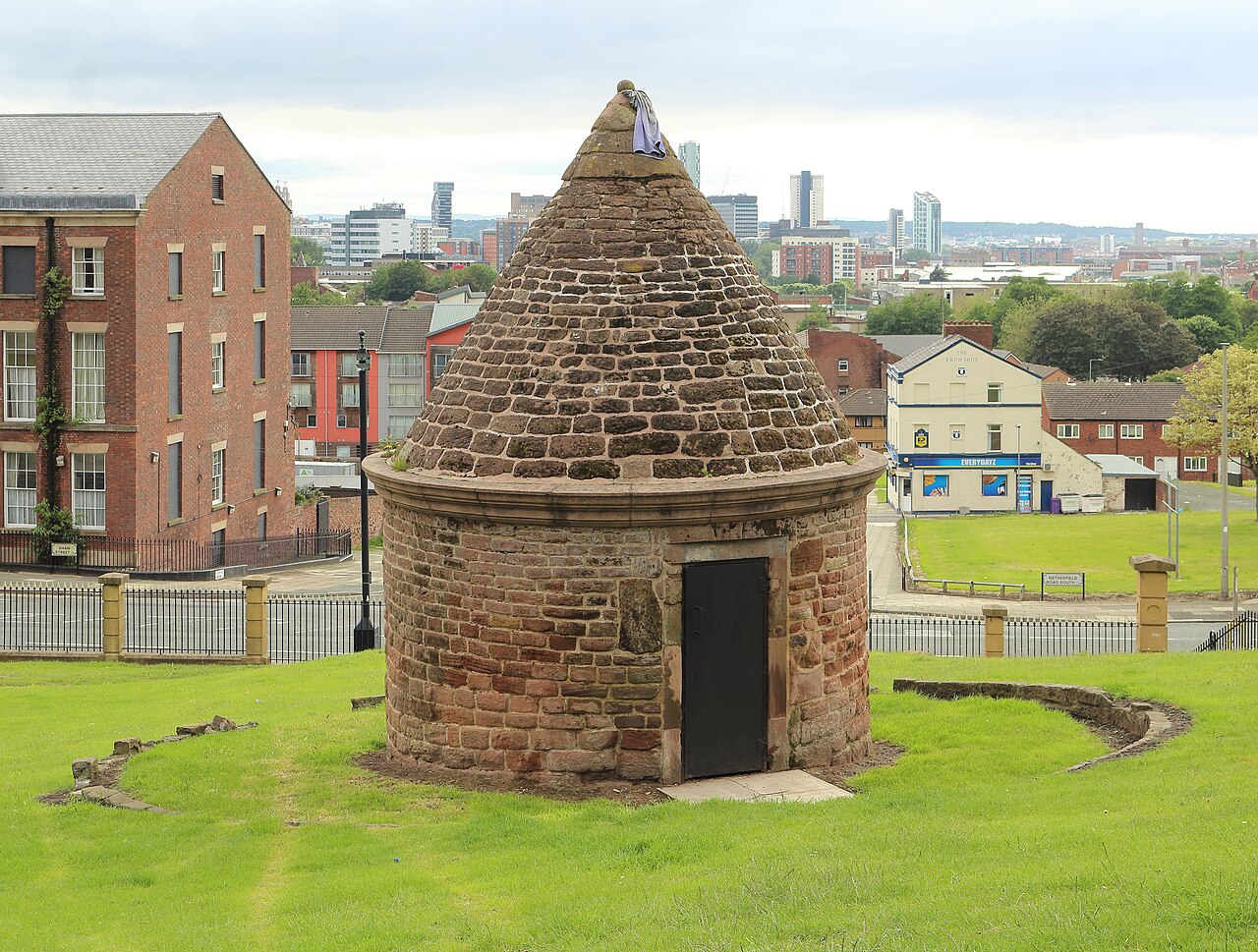
The badge above the walkway at Bramley Moore is hard to miss. The building behind it is much smaller: the Everton Lock-Up on Everton Brow, familiar to most Blues as Prince Rupert’s Tower.
Put the two photographs together and you can see how a squat stone building became a football emblem. Mark’s picture shows it enlarged across the stadium’s brickwork; Phil Nash’s shows the original, with the city beyond.
Before it was a badge
The lock-up dates to 1787. Historic England records a round red-sandstone building with a conical roof, listed Grade II since 1975. Historic England’s building record
It held people temporarily, often overnight, before release or transfer to a magistrate. Mike Royden’s research for the Everton FC Heritage Society describes a working part of village policing. There was nothing grand about its original job. The Heritage Society’s history
In Nash’s photograph, the low doorway and broad stone roof are clear. Look back at the badge: the proportions are stretched, with extra detail around the tower. It is a recognisable emblem rather than an exact drawing of the building.
Why “Prince Rupert’s”?
The nickname reaches back to the Civil War. Rupert’s Royalist forces used Everton Ridge during the siege of Liverpool in 1644. The lock-up was built 143 years later, so it could never have been his headquarters. Ken Rogers explains the distinction in the Heritage Society’s account. The story behind the name
Prince Rupert’s Tower is the name that stuck. Everton Lock-Up tells you what it actually was.
From a club tie to the shirt
Club secretary Theo Kelly designed the crest for new club ties in 1938. Royden’s research reproduces the board minute of 15 March authorising its use. Kelly and chairman Ernest Green wore the ties at Blackpool at the start of the 1938/39 season. The 1938 records
The tower-based crest did not reach the playing shirt until 1978/79, forty years later. By then it had already appeared on club ties, blazers and printed material. The badge on your first Everton shirt may look different from today’s, but the little tower gives those versions a family resemblance.
Look closer
The details around the tower
The current crest dates from 2014. Open each detail below, or enlarge either photograph to compare the building and the badge. Premier League crest guide
The tower
The Everton Brow landmark sits at the centre. Compare its tall outline on the badge with the broader building in the photograph.
The wreaths
The two laurel wreaths represent victory, one on either side of the tower.
1878
The club’s founding year. The building itself is older: it dates to 1787.
Nil Satis Nisi Optimum
“Nothing but the best is good enough.” The motto runs beneath the shield, partly hidden by the walkway in Mark’s photograph.
Still a link to Everton Brow
At Bramley Moore (Hill Dickinson Stadium), the crest carries a piece of the old neighbourhood onto the waterfront. Mark’s photograph catches that link in brick and metal. Nash’s takes us back to the modest building that supplied the shape.
You might know it from a visit to Everton Brow, a family story, or simply from wearing the badge. That is the next part of this feature: the photographs and memories people have kept.
Seeing the original
The lock-up is on Everton Brow. Interior visits have been offered at special events organised by the Heritage Society and Friends of Everton Park; check their current notices before planning to go inside. Their May 2026 opening was a one-day event. Heritage Society visit information
More to look at
About this feature
Research checked 21 October 2026. Building and crest history: Historic England, the Everton FC Heritage Society and the Premier League; links are beside the relevant passages. Photograph credits and the reuse licence for Phil Nash’s image appear above.